
David Headley, who has confessed to his involvement in the Mumbai attacks, had received four 'jihadi' videos from Lashkar-e-Tayiba's Pasha as part of the terror group's efforts to indoctrinate him.
After much delay and discussions, the interrogation of Lashkar-e-Tayiba operative David Headley by a team of the National Investigation Agency has finally come to an end.Sources close to the members of the investigating team told rediff.com that the Pakistani American terror operative proved to be a tough nut to crack.Headley was well prepared to face the NIA team's questions and throughout the interrogations, he stuck to the earlier responses.
Pakistani-American terrorist David Headley's plea bargain, under which he confessed to plotting the Mumbai terror attacks, throws light on close links between the Al Qaeda and the Lashkar-e-Tayiba, according to former Central Intelligence Agency expert Bruce Riedel.Headley's story showed in clear contours the close relationship between Al Qaeda and the Pakistani militant group LeT, Riedel, who led the review of the Obama administration's Af-Pak strategy,said.
American terror suspect David Headley had visited the Osho Ashram located near the German Bakery in Koregaon Park -- where eight people were killed in a terror attack on Saturday -- twice in 2008 and 2009.The area also houses a Jewish prayer house. According to the probe by the National Investigation Agency, Headley had moved to Pune from Goa to conduct a reconnaissance of the area around Koregaon Park.
Two years after his role in terror activities surfaced, the National Investigation Agency on Saturday chargesheeted Lashkar-e-Tayiba operative David Headley, Lashkar founder Hafiz Saeed and two Inter-Services Intelligence officers for plotting terror attacks in India including the 26/11 strikes.
Interview with C D Sahay, former chief of the Research and Analysis Wing, on Headley and terror.
Investigations in the Headley-Rana case have revealed the involvement of a Kerala-based man, who has been part of the immigration business.
Fresh details have emerged about David Headley, who was arrested by the Federal Bureau of Investigation in October for plotting terror attacks in India, with the United States media reporting that the terror suspect was born to a Pakistani diplomat father and an American mother.At the age of 16, Headley, who was born Daood Gilani, was taken out of Pakistan, where he attended a military school, and brought to Philadelphia by his mother.
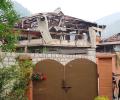
Markaz Taiba of Lashkar-e-Taiba (LeT) in Pakistan's Muridke, one of the nine terror camps struck by the Indian armed forces on Wednesday, is a site where terrorists including Ajmal Kasab involved in the 2008 Mumbai attack were trained, a senior military official said.
A United States court on Wednesday rescheduled the sentencing of Pakistani American LeT terrorist David Headley, accused of involvement in 26/11 Mumbai attacks, from January 17 to January 24, while that of his accomplice Tahawwur Rana has been rescheduled for a second time to January 17.
The United States will consider giving Indian authorities access to David Headley for additional questioning by its investigating agencies about his role in the Mumbai terror attacks, the State Department has said. "In the past, we have given India full access to Headley, and I think that when a case is in litigation it's impossible to do that. But moving forward, I think we would consider further access," State Department spokesman Mark Toner said.
Lashkar-e-Tayiba operative David Headley has told a jury in the Tahawwur Rana trial that Pakistan Prime Minister Yousuf Raza Gilani attended his father's funeral, but the latter's office rubbished the claim.
India is expected to get access to Lashkar-e Tayiba operative David Headley within 30 days of sending a letter of request, which is being prepared, government indicated in New Delhi on Monday.
A request letter for access to Headley, Lashkar-e-Tayiba operative who has admitted his role in Mumbai attacks, would be sent by Home Ministry next week to the US Department of Justice, official sources said on Friday.
Special Secretary (Internal Secretary) U K Bansal met Solicitor General Gopal Subramanium on Tuesday night and discussed with him about the options available before Indian investigators to question Headley under the plea bargain agreement between him and the American government.
The attorney for suspected LeT operative David Headley charged with criminal conspiracy in the 26/11 Mumbai attacks has said his client is cooperating in the investigation, but declined to comment on "the substance of the allegation" in the charges filed by US prosecutors.
United States State Department spokesman Mark Toner's statement has been an encouraging one for Indian investigating agencies probing the David Headley case.
United States would consider giving India further access to David Headley, who has pleaded guilty in the Mumbai terrorist attacks case, for questioning by its investigating agencies once New Delhi makes such a request, the state department has said.
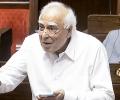
Rajya Sabha MP Kapil Sibal has congratulated both the previous UPA government and the current dispensation for the extradition of Tahawwur Hussain Rana, the mastermind behind the 2008 Mumbai attacks. Sibal expressed confidence that the extradition will shed light on the involvement of individuals within Pakistan's establishment in the attacks. Rana is being questioned by the National Investigation Agency (NIA) to uncover the full extent of the conspiracy behind the deadly 2008 terror strikes. Sibal highlighted the efforts of the UPA government in establishing the NIA and pursuing Rana's extradition, and also acknowledged the current government's success in bringing him back to India. The interrogation is expected to focus on Rana's potential ties to the Lashkar-e-Taiba (LeT) and his role in the Mumbai attacks.
Home Minister P Chidambaram had briefed the Cabinet Committee on Security, where External Affairs Minister S M Krishna was present, on the interrogation report of LeT operative David Headley before visiting Pakistan for the SAARC Interior Minister's conference last month.
Amid reports that the Obama administration was upset over Indian officials going into the details provided by Headley, State Department spokesman P J Crowley said the US values cooperation with India on combating terrorism but it places responsibility on both countries.
There has been a huge cover-up of the LeT iceberg in India that helped David Headley and Tahawwur Rana plan the 26/11 terror strike, says B Raman
The Maharashtra government's decision to appeal against the acquittal of Fahim Ansari and Sabahuddin largely depends on India's interrogation of Lashkar operative David Headley.
India may get access for the second time to Mumbai attack terrorist David Headley and his accomplice Tahawwur Hussain Rana, currently in the custody of the United States, for questioning. The positive indication was given by Washington to New Delhi during a recent bilateral meeting held in America.
The United States on Saturday said it will allow Indian investigators to interrogate David Headley, who has pleaded guilty to his involvement in the Mumbai terror attacks, but made it clear that he cannot be extradited to India.

India has sought access from the United States to the 26/11 Mumbai terror attack convict David Headley and his accomplice Tahawwur Rana -- both of whom were sentenced by a Chicago court after being found guilty of terrorism charges.
A team of the National Investigating Agency had interrogated Lashkar-e-Tayiba operative David Headley for nearly 30 hours in the presence of his lawyer and investigators of the Federal Bureau of Investigation. During the interrogation, Headley, who is currently serving a jail term in the United States under a plea bargain, offered some chilling insights into the workings of the terror outfit.
Headley's trial thus promises to be fascinating and important. If it is established that Headley was working for Headley all along, it will establish the Mumbai terror attacks as being a joint Lashkay-Al Qaeda operation, says Riedel. This, if true, is bad news for American counter-terrorism ops given the Lashkar's global network of supporters the Pakistani diaspora

As Indian and American investigators dug deeper into the David Headley case, some Bollywood stars who had reportedly interacted with the American terror suspect during his stay in Mumbai in 2007-2009, are likely to be questioned.

Questioning the effectiveness of America's secret surveillance programme, a top investigative publication in Washington, DC has said the US intelligence failed to track Mumbai attack convict David Headley and he was arrested only after a tip off was provided by the British intelligence.
Pakistan Prime Minister Yousuf Raza Gilani had attended the funeral of Mumbai attacks accused David Headley's father in 2010. This was disclosed by 50-year-old Headley at a Chicago court during the trial of co-accused Tahawwur Rana in the 26/11 attacks case.
Talking tough, External Affairs Minister S M Krishna on Tuesday told Pakistan to take "seriously" the revelations made by Lashkar-e-Tayiba operative David Headley on the Mumbai attacks and not "push them under the carpet".
A Delhi court on Saturday took cognisance of the National Investigation Agency chargesheet against Pakistani-American David Headley Coleman and eight others for allegedly carrying out several terror attacks in India.
Pakistani-American David Headley's confession in a US court about his involvement in the Mumbai terror attacks has strengthened the 26/11 case, currently being heard by a special judge in Mumbai, public prosecutor in the case Ujjwal Nikam said on Friday.
Was 26/11 conspirator David Headley working for CIA, ISI or LeT? Did he know more about the Ishrat Jahan module? Five years since the terror attacks and we are yet to find clear answers on the many mysteries regarding this man. Vicky Nanjappa reports
Roemer said, "Headley may well be responsible for canvassing, tracking information to pass on to attackers of Mumbai blast. This is the sort of the thing that the US is extremely serious about. We want, along with Indian people and Indian government, to bring him to justice."
American national and Lashkar-e-Tayiba terror suspect David Headley had stayed in a hotel close to a Jewish centre in Pune during his visits to the Osha ashram in the city in 2008-09.
Headley visited Goa in 2008 during the last leg of the reccee that he had conducted in Mumbai. Sources in the Intelligence Bureau told rediff.com that Headley was definitely not on a holiday in Goa, but was exploring the possibility of carrying out a terror strike in the tourist destination. The NIA says it is possible that Headley was using the American couple in Goa as a cover. For the Lashkar, Goa was a backup option to the Mumbai attack.
Security agencies today did not rule out the possibility of execution of plans by Pakistan-based terror outfit Lashker-e-Tayiba of the places recced by David Headley, an American terror suspect, arrested in the United States last October.
"Headley created messages, saving them in the drafts folder of a Web-mail service rather than sending the message. he person creating such a message then provides a colleague with the user name and password for the account, which enables the second person to log on and read the communication in the draft folder without an e-mail having been sent. This procedure is referred to as an electronic dead drop.
